How the DUOHEAT heat pump works
From an oil-free centrifugal compressor to a life-cycle assessment of the finished system — the engineering behind a heat pump built for industrial temperatures.
Breaking the 100 °C barrier
Typical heat pumps generate heat below 100 °C. High-temperature heat pumps (HTHP) are designed to break that barrier: by harnessing low-temperature waste heat and upgrading it with clean electricity instead of burning fuel, they open up applications that conventional heat pumps cannot reach. DUOHEAT pushes this further still, targeting a delivery temperature of up to 200 °C — achieved through a two-stage compression design rather than a single compression step.
The heart of the system
At the core of DUOHEAT is a novel, oil-free, high-speed centrifugal compressor. Bearings and seals that don't require oil reduce energy losses, simplify maintenance, and remove the risk of leaking substances that could harm the environment. The compressor's design has a direct effect on the efficiency of the whole system and on whether it reaches its target temperature parameters.
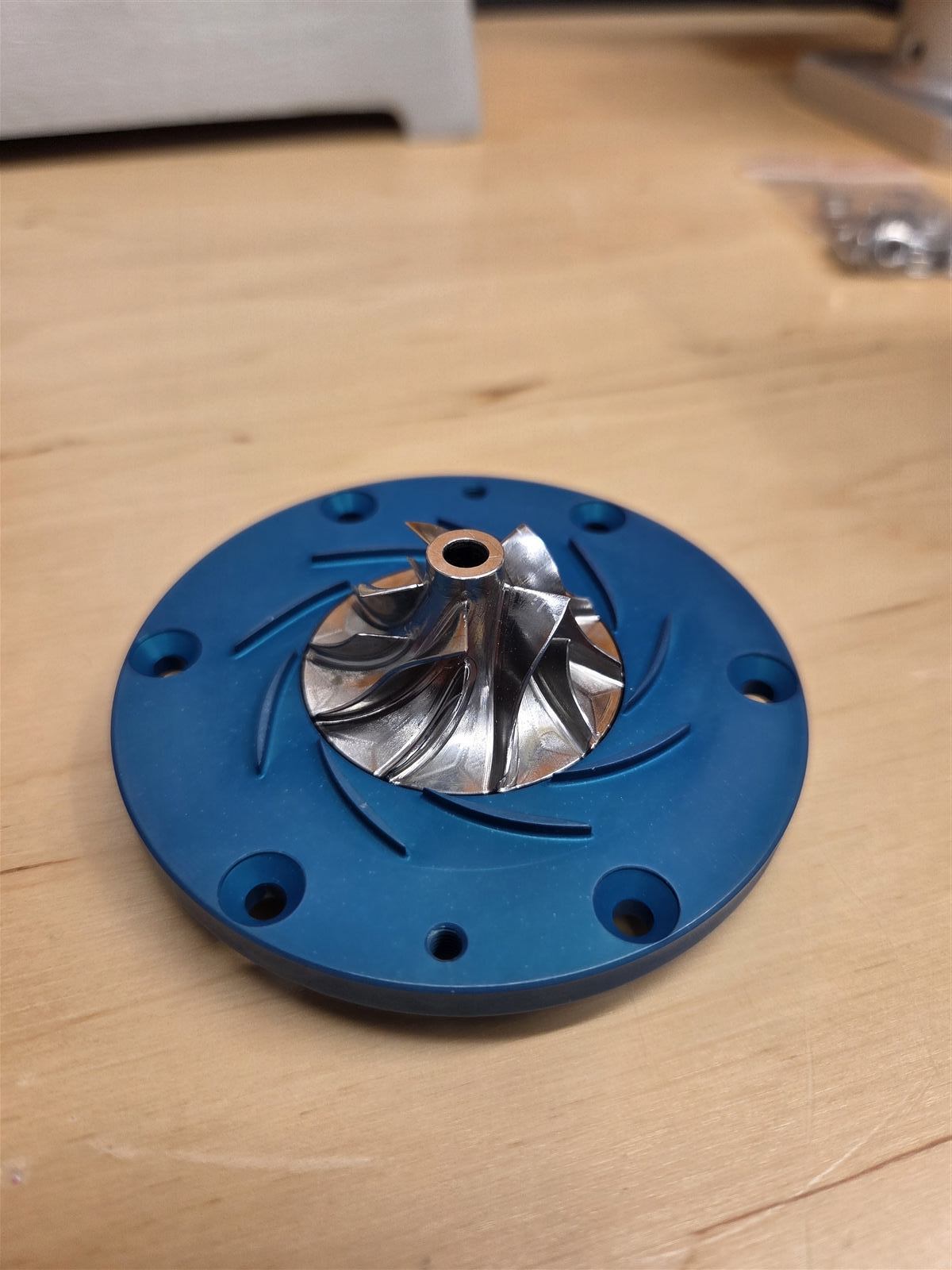
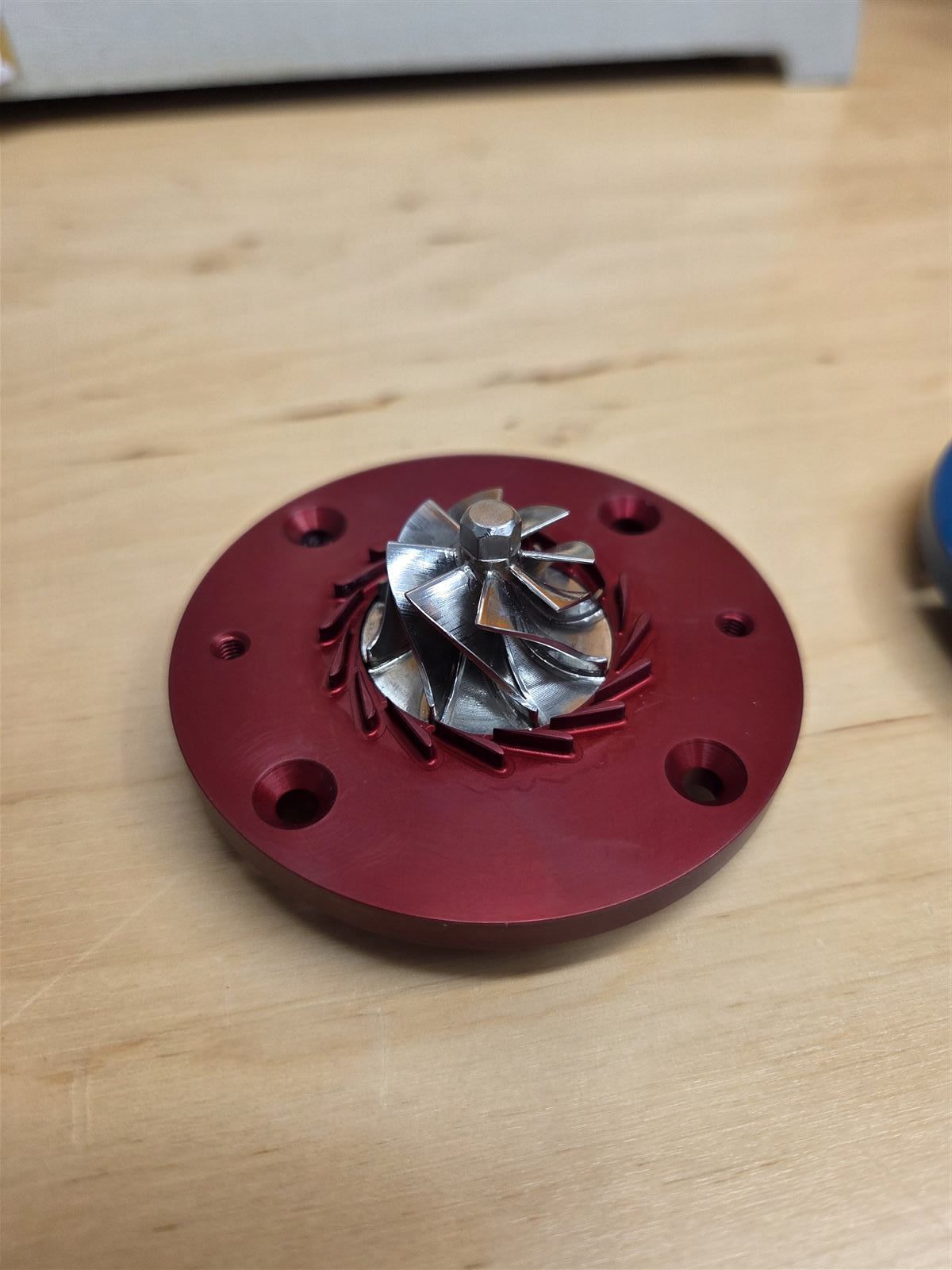
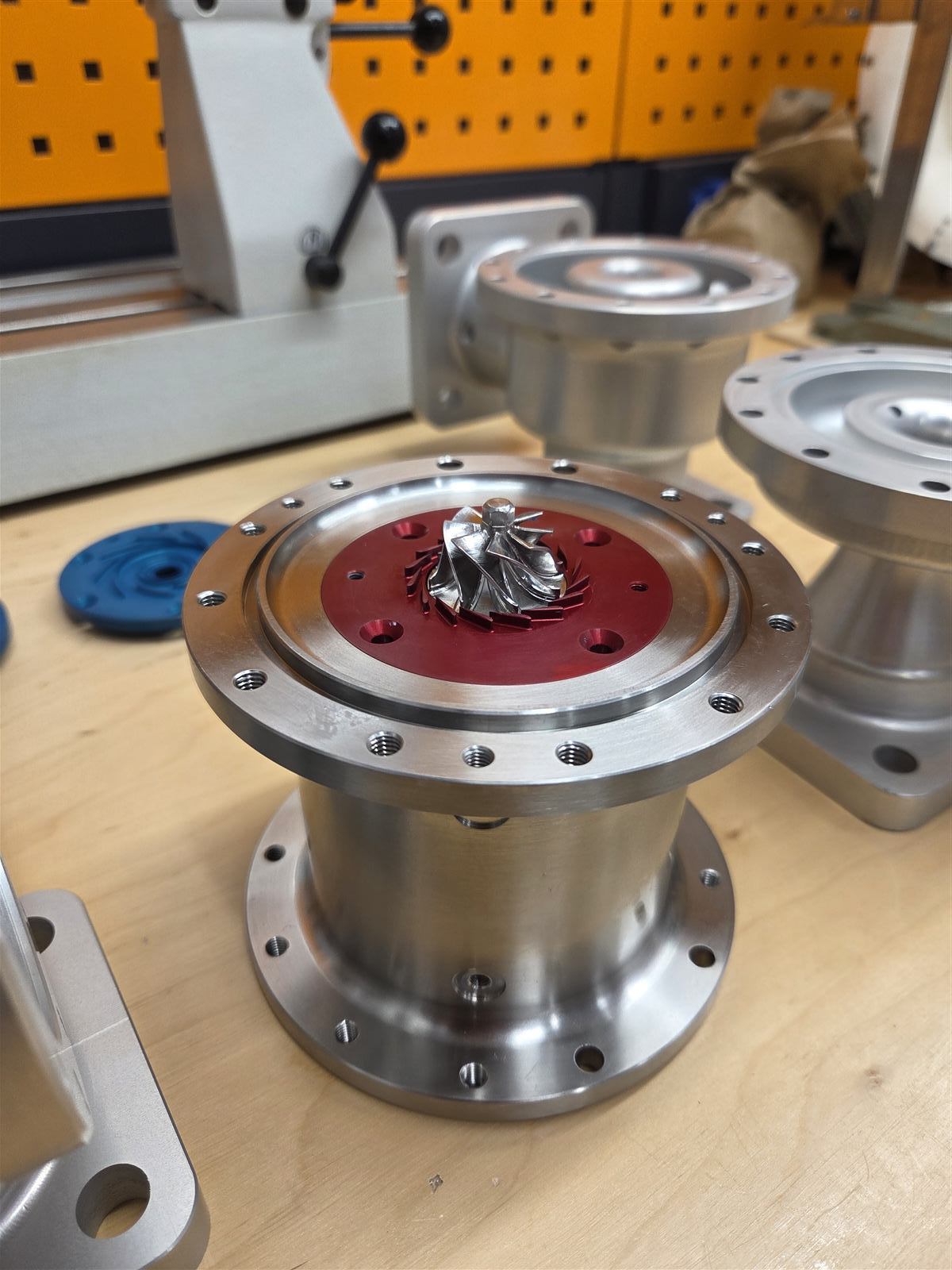
These photographs illustrate the type of machinery involved in turbomachinery research and are not photographs of the DUOHEAT compressor itself; real photos of the DUOHEAT hardware will replace them as the project produces its own components.
Matching exchangers to a demanding cycle
The system's heat exchangers are designed and selected by AGH University of Krakow, including the construction and optimisation of the upper heat source. The team uses computational fluid dynamics (CFD) simulations and metamodel-based optimisation methods to generate a series of optimal design variants — work that contributes directly to the development of high-efficiency heat exchangers, a key requirement for high-temperature heat pump installations.
Choosing a fluid that works — and doesn't harm the environment
Selecting the working fluid that circulates through the pump and carries its energy is a central part of the research. The project's aim is a fluid that is natural and organic, rather than one that could negatively affect the environment. Choosing the right fluid means balancing its thermodynamic properties against safety and environmental impact.
From simulation to demonstrator
Development combines thermodynamic modelling, numerical simulation and multi-criteria optimisation — weighing economic and environmental factors together — to determine the best operating parameters, compressor geometry and heat-exchanger design. The research programme covers the compressor, heat exchangers, refrigerant selection, phase transitions and two-phase flows, with experimental work validating the theoretical models and feeding further refinements back into the design.
The result of this work is a technology demonstrator, tested under industrial conditions, together with a diagnostic model of the installation and a full life-cycle assessment (LCA) evaluating the device's environmental impact across its operating lifetime.